
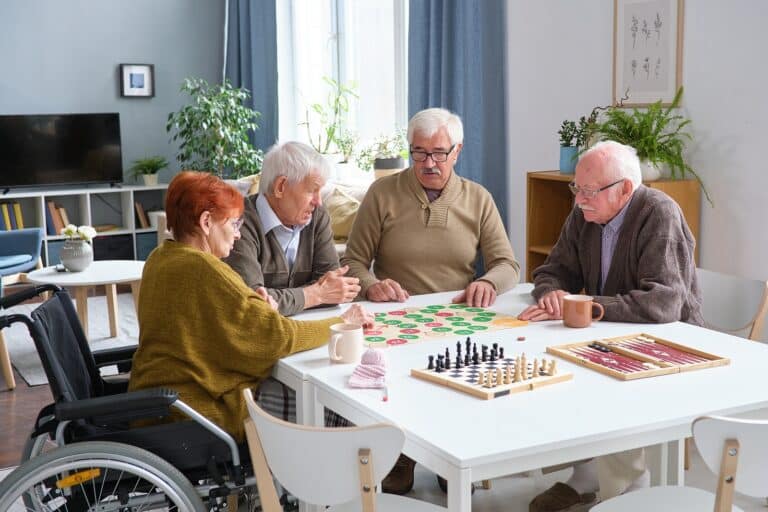
When families begin exploring senior housing, they often focus first on practical matters. They compare apartment sizes, monthly costs, safety features, dining options, and transportation. Those details are important, but they can overshadow another factor that may have an equally meaningful effect on daily life: the opportunity to stay socially connected. For older adults who have spent years living in the same home, social routines can gradually become smaller without anyone noticing. Friends move away, driving becomes less comfortable, familiar gathering places change, and everyday errands require more effort. An independent living community can make connection part of the normal rhythm of the day again.
Social wellness is not simply about having a full activity calendar. It is about living in an environment where conversation, shared interests, and spontaneous interaction are easier to find. A resident may meet a neighbor while walking a dog, join others for a meal, attend a lecture, participate in a card game, or decide at the last minute to go on an outing. Each interaction may seem small on its own, yet together they can create a stronger sense of belonging and purpose.
Why Social Circles Often Become Smaller With Age
Many older adults do not describe themselves as lonely. They may be comfortable at home and proud of their independence. Even so, the number of people they see in a typical week may slowly decrease. A spouse may have passed away. Longtime friends may have health concerns of their own. Adult children may live nearby but still balance jobs, children, and other responsibilities. Seasonal weather, mobility changes, or the loss of a driver’s license can make it harder to attend gatherings that were once routine.
This gradual narrowing of daily life can be difficult for families to recognize because it does not always look like a crisis. A parent may still manage meals, medications, and household tasks, but spend most days without meaningful face-to-face contact. Phone calls help, yet they do not fully replace the energy that comes from sharing a table, laughing with a group, or being expected at a regular club meeting.
In senior housing, social opportunities are located close to home. Residents do not have to coordinate a long drive, search for parking, or plan every detail in advance. The reduced effort can make participation feel natural rather than burdensome. Just as importantly, residents can choose how involved they want to be. Independence is preserved because social activity is available, not forced.
Connection Can Add Structure to the Day
A pleasant routine gives the day shape. Knowing that a fitness class begins in the morning, a discussion group meets after lunch, or a movie is planned for the evening can provide something to anticipate. That sense of expectation matters, especially for someone whose schedule became less predictable after retirement.
Regular activities also make it easier to form relationships over time. Close friendships rarely appear after one brief introduction. They grow because people see one another repeatedly and share experiences. A resident who attends the same walking club each week begins to recognize familiar faces. Conversation becomes easier. Someone notices when a member is absent. A simple activity becomes a dependable point of connection.
Avalon Park offers resident-led clubs, lectures, classes, movies, hobbies, fitness opportunities, social gatherings, and off-site outings. The value of these options is not that every resident must participate in everything. The value is choice. One person may enjoy a book club and occasional cultural excursion, while another prefers a daily walk, card games, and dining with neighbors. A broad range of activities allows residents to build routines around their own interests and energy levels.
Shared Meals Create Everyday Opportunities for Friendship
Meals can be one of the most social parts of the day, yet eating alone often becomes common for older adults who live by themselves. Preparing a full meal for one person may feel like too much work, and the absence of conversation can make dining feel purely functional. In an independent living community, meals can once again become occasions to slow down, enjoy good food, and connect with others.
Dining does not have to involve a formal event to be meaningful. A familiar greeting from another resident, a short conversation with someone at a nearby table, or an invitation to sit together can help a person feel known. Over time, these routine encounters can become friendships. They also offer a low-pressure way for new residents to meet people without having to walk into a large organized gathering alone.
The dining program at Avalon Park includes table-service meals in the dining room as well as grab-and-go choices from the Chef’s Pantry. Having options allows residents to decide whether they want a leisurely social meal or something convenient on a busy day. That flexibility can support both independence and connection.
Activities Are More Meaningful When They Reflect Real Interests
A common misconception is that community activities are simply ways to fill time. The best programs do much more. They give residents opportunities to continue interests they already love, rediscover hobbies they set aside, and try something new in a comfortable setting.
Lifelong learning classes and lectures can keep curiosity active. Art and hobby groups provide a creative outlet. Book clubs and discussion groups encourage thoughtful conversation. Fitness classes can make movement more enjoyable because participants are surrounded by others working toward similar goals. Off-site excursions offer a change of scenery and help residents remain connected to the broader community.
Resident-led clubs can be especially valuable because they allow people to contribute, not merely attend. Someone who has spent a lifetime gardening, reading history, playing cards, or organizing community events may find new ways to share that experience. Being able to contribute knowledge and enthusiasm reinforces a sense of identity that does not disappear after retirement.
Social Wellness and Physical Wellness Often Work Together
Social and physical health are not separate parts of life. A person may be more likely to take a walk when a neighbor is waiting, attend a fitness class when familiar faces are there, or try a new activity when invited by a friend. The social element provides encouragement without making exercise feel like another obligation.
Avalon Park includes walking trails, a fitness and wellness center, cardio and strength equipment, chair aerobics, and weight-training classes. These resources support movement, but the community setting can make them easier to use consistently. A resident does not have to drive to a gym or exercise alone at home. Physical activity becomes one of many ways to engage with the day.
The same is true of outings and hobbies. Walking through a local attraction, shopping with a group, or attending a cultural event may involve more movement than a typical day at home. Because the focus is enjoyment and companionship, the physical benefits can feel like a natural part of the experience.
Families May Notice Changes That Are Hard to Measure
The benefits of an active social life are often visible in subtle ways. An older adult may have more stories to share during a phone call. They may begin planning what to wear to an event, talking about a neighbor, or looking forward to the next club meeting. Their week becomes filled with specific people, places, and experiences rather than long stretches of unstructured time.
Adult children may also feel relief. They no longer have to be the only source of companionship or entertainment. Family visits can become more enjoyable because the relationship is not carrying the entire weight of a parent’s social needs. Instead of arriving with the pressure to fill an empty week, relatives can simply spend time together and hear about what has been happening.
This does not mean family relationships become less important. In many cases, they become stronger because the older adult has a broader support network and a more satisfying daily routine. Family members remain central, but they are part of a fuller life rather than the only connection to the outside world.
Independence Includes the Freedom to Be Involved
Some older adults worry that moving into senior housing will mean losing privacy or being expected to follow a group schedule. Independent living is designed to offer the opposite. Residents have their own apartments and control over how they spend their time. They can participate in a busy day of activities, enjoy a quiet afternoon at home, invite family to visit, or change plans according to their preferences.
True independence is not only the ability to manage tasks alone. It is also the freedom to choose among meaningful options. When social opportunities, transportation, dining, fitness, and events are readily available, residents can decide what makes each day satisfying without depending on someone else to arrange every detail.
For families evaluating communities, it is worth looking beyond the apartment and asking what daily life actually feels like. Are residents gathering naturally? Are there opportunities for both structured activities and spontaneous conversation? Can people pursue familiar interests while exploring new ones? Does the environment make it easy to participate without taking away the choice to enjoy privacy?
An active social life may not be the first item on a family’s comparison list, but it can become one of the most valuable parts of independent living. At Avalon Park, the combination of social gatherings, resident-led clubs, wellness activities, dining choices, and community outings gives residents many ways to remain engaged on their own terms. The right community does more than provide a comfortable place to live. It creates room for friendship, purpose, and the simple pleasure of having something to look forward to.
If you or an aging loved one is considering senior housing in St. Charles, MO, please get in touch with the caring staff at Avalon Park today at (636) 622-8136.
Avalon Park offers independent living in Cottleville, serving the surrounding areas, including Chesterfield, O’Fallon, St. Peters, Harvester, Weldon Spring, St. Charles, Lake Saint Louis, Dardenne Prairie, Wentzville, and St. Charles County.
