
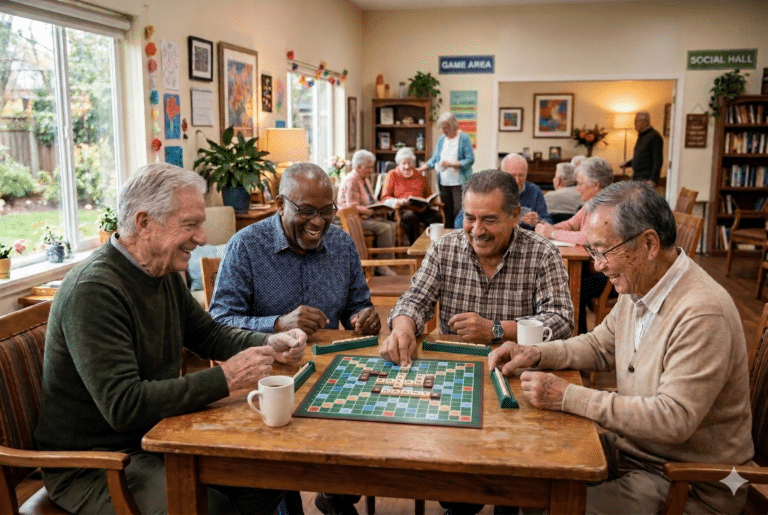
For many seniors, the decision to move into a senior independent living community is about much more than convenience or safety. It’s about connectivity. These communities are built around socialization—and research continues to confirm that this focus is not just thoughtful, but necessary.
More Than a Home
Senior independent living communities differ from assisted living or nursing facilities in one key way: the residents living there do not require medical care on a 24-hour basis. However, like all human beings, they do need meaningful interaction with other people.
Developers, administrators, and staff at these communities understand this need, which is why they take special care to ensure that residents have plenty of opportunities for socialization. For instance, communities are intentionally designed with shared spaces: dining halls, libraries, fitness centers, and garden courtyards that encourage residents to linger, gather, and talk. The physical environment itself sends a clear message—life here is meant to be lived together.
Programming That Brings People Together
It’s not just the architecture but the daily and weekly programming that keeps social life active in senior independent living communities. Residents’ calendars are usually filled with plenty of options, from fitness classes to book clubs to cooking demos, game nights, art workshops, and off-site excursions.
These activities have a dual goal. On the one hand, they help residents use their time well. On the other hand, they give them a reason to show up—and that’s where friendships are made. Shared interests become shared experiences and shared experiences become the basis for community.
Many communities also partner with local schools or volunteer organizations to bring younger visitors through the doors at intergenerational events. For residents and visitors, these interactions reduce age gaps and help fight the social isolation often found in older populations.
Why Senior Health Depends on Socialization
The relationship between socialization and the well-being of older adults is well established. Chronic loneliness has been linked to a higher risk of cognitive decline, depression, cardiovascular problems, and even early death. For seniors living alone at home, not having regular social contact can become a serious health concern, one that often goes unrecognized until it has already taken a toll.
There’s a built-in remedy in senior independent living communities. It’s the small but important moments that keep the mind and spirit healthy, whether it’s residents sharing a meal, attending an event, or stopping to wave at a neighbor on the way to the mailbox. Social interaction boosts the brain, encourages physical activity, and provides a sense of purpose that’s hard to manufacture by oneself.
Feeling At Home
Perhaps the most underappreciated benefit of these communities is the sense of belonging they offer. Rather than continuing to live on their own, seniors have new connections to nurture, new adventures to explore, and a newfound confidence that gives them something to look forward to every day.
At their best, senior independent living communities are more than just housing. They are places where older adults flourish socially, emotionally, and intellectually.
Sources:
https://www.uclahealth.org/news/article/how-and-why-stay-social-you-age
https://pnsoc.com/blog/benefits-socialization-seniors
If you or an aging loved one is considering senior independent living in Chesterfield, MO, please get in touch with the caring staff at Avalon Park today at (636) 622-8136.
Avalon Park offers independent living in Cottleville, serving the surrounding areas, including Chesterfield, O’Fallon, St. Peters, Harvester, Weldon Spring, St. Charles, Lake Saint Louis, Dardenne Prairie, Wentzville, and St. Charles County.
